
Negative keywords are an essential piece of any AdWords campaign to help get the right type of traffic based on the goals of a campaign. A negative keyword is a word or phrase that will prevent your ad from being triggered if used in the search term. Negative keywords follow the same rules as regular keywords in that you can use them as exact match, phrase match, modified broad match, and broad match. This allows you to get creative and trim out specific types of traffic that you do not want coming to a site.The best way to think about negative keywords would be if you have a tree that is growing out of control. While it is great that the tree is thriving, it needs to be trimmed in order for it to grow in a healthy and sensible way, especially in relation to everything else around it. The same goes for your AdWords campaigns. If you are getting lots of clicks and impressions that are eating up your budget, but have a low conversion rate it may be a good idea to trim out the bad traffic with negative keywords.How and when to use negative keywords will vary from situation to situation depending on the type of site that you have. For e-commerce sites, some common bad traffic issues we see come from educational traffic, discount traffic, and competitor brand traffic. Educational traffic is easily identifiable because they come to the site on keywords that are related to the how and why of products. As an e-commerce site, you only want to pay for purchasers who are ready to buy and not traffic looking for information because of their low conversion rate. By adding question and information words to your negative keyword list it will help to bring in more effective traffic. In the example below we see oil filter and oil change ads popping up for the search term “oil change installation”. The keyword installation implies that they already have the product and are looking for a “how to”, which means traffic coming from this keyword likely will not result in conversion.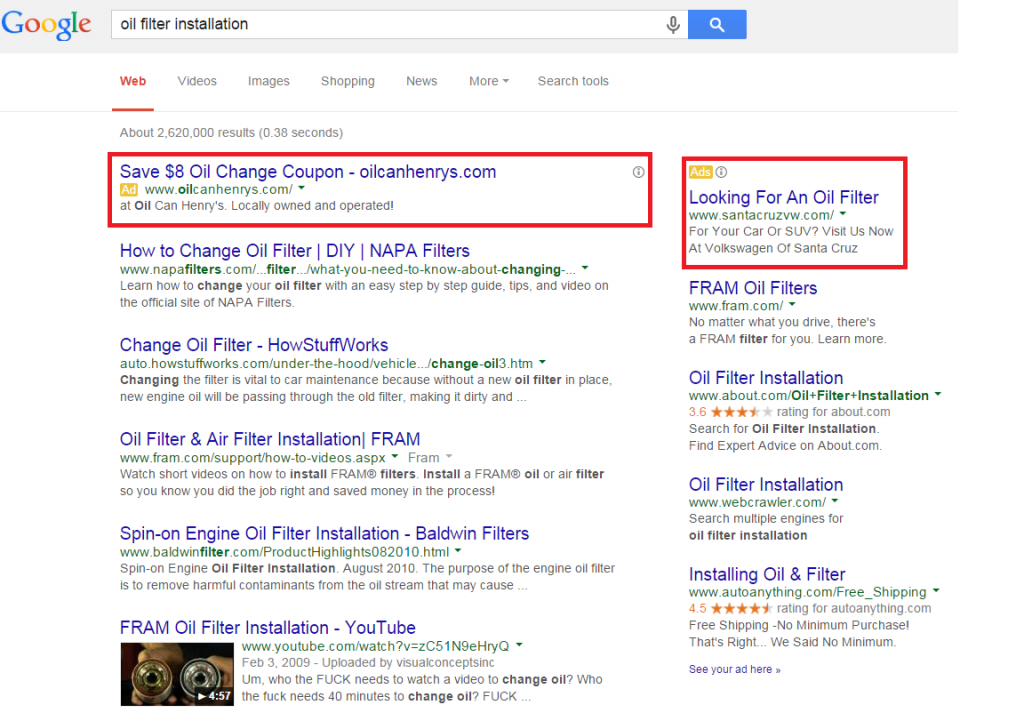 The second example of bad traffic is search terms that contain “discount” or “cheap”. These can be very powerful words to build traffic, but unless you are the cost leader tend to lead to very low conversion rates. Eliminating these types of keywords distances you from the cost leader battle and enables you to find consumers more interested in other values that a product has to offer.Finally competitor brands should be eliminated as keywords. If a consumer is directly searching for a competitor 99 times out of 100 this is going to be a losing battle. Cut your losses and go against competitors on keywords that are less biased where the consumer has not already made up their mind as to who they would like to purchase from.These are just a few examples of how negative keywords can be a powerful piece of your AdWords campaigns. Make sure to keep an eye out for traffic that is negatively effecting your campaigns and trim it out to create a more profitable campaign. For more information on negative keywords and how to add them into campaigns, see our post on Negative Keywords & Search Terms for Performance Optimization or check out the Google support page here.If you have questions or more good examples of where you used negative keywords effectively, leave them in the comments below![/av_toggle_container]
How to Use The All New Project Check-in System
Last Updated / Reviewed: October 19th, 2023 GOAL: This document serves as an instructional guide
